Master the home row keys (A, S, D, F, G, H, J, K, L) - the foundation of touch typing. Isolating specific keys or hands is one of the most effective ways to build typing skills. When you practice only the keys you're weakest at, you eliminate the compensation that happens during full-keyboard typing.

TL;DR: Isolated practice on foundation technique builds muscle memory faster than full-keyboard drills. Spend 10–15 minutes daily on weak areas, then integrate back into complete passages.
Why Isolated Practice Works
Full-keyboard typing lets you compensate. If your left ring finger is slow on 'W', your left middle finger might subtly adjust to help. Your speed looks fine, but the underlying weakness never gets fixed. Isolated practice removes that compensation and forces the correct finger to do the work.
Home Row Typing Practice focuses exclusively on home row only. Every word, every sentence, every drill uses only those keys. There's nowhere to hide. If your foundation technique is weak, you'll see it immediately in your accuracy and speed scores.
Research on motor learning consistently shows that isolated, repetitive practice on specific movements builds muscle memory faster than varied, whole-task practice 16 . It's the difference between a pianist practicing a difficult passage 50 times in isolation versus playing the entire piece and hoping the hard part improves.
The Finger Map
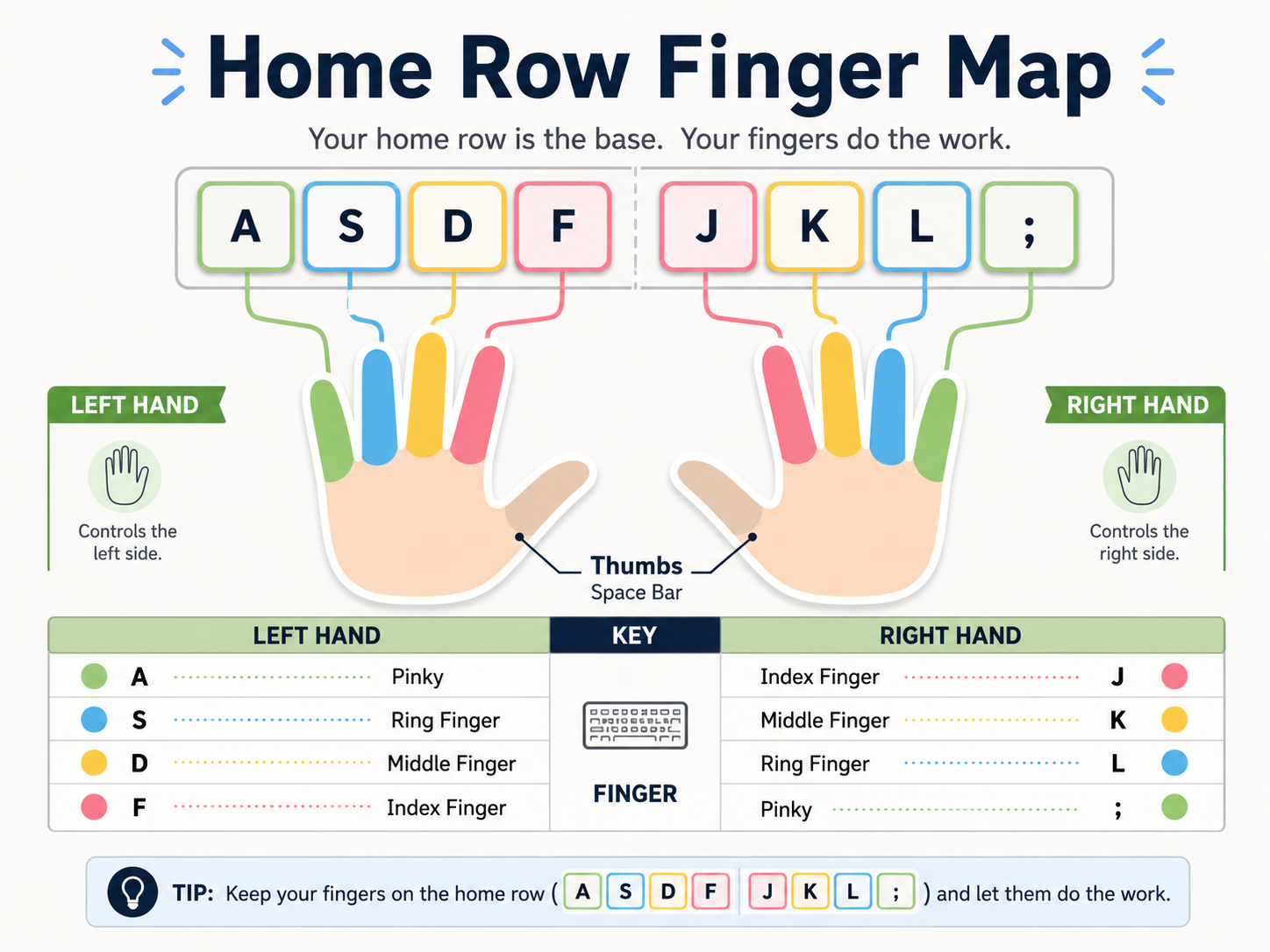
Home Row Typing Practice uses these specific keys:
| Category | Keys Used |
|---|---|
| Home row | Master the home row keys (A, S, D, F, G, H, J, K, L) - the foundation of touch typing. |
Each key belongs to a specific finger. Our correct finger placement guide maps every key to its assigned finger. If you're using the wrong finger for any of these keys, isolated practice will expose it — and give you the repetition needed to retrain the correct finger.
How to Use This Practice
| Approach | Duration | Goal |
|---|---|---|
| Warm-up drill | 5 minutes | Activate foundation technique before full-keyboard practice |
| Weak-key focus | 10–15 minutes | Fix specific problem keys within this set |
| Endurance build | 10+ minutes | Sustained accuracy on these keys only |
| Integration | 5 minutes | Full-keyboard typing after isolated drill |
The integration step matters. Isolated practice builds the skill, but you need to transfer it back to complete words and sentences. After 10 minutes of home row typing practice, spend 5 minutes on a paragraph typing test or english typing test to cement the muscle memory in context.
When to Use This vs. Full-Keyboard Practice
Use home row typing practice when:
- You're learning touch typing and haven't mastered this section yet
- Your accuracy on these specific keys is below 90%
- Your full-keyboard speed has plateaued and you suspect this area is the bottleneck
- You're warming up before a long typing session
Use full-keyboard practice when:
- Your accuracy on these keys is already 95%+
- You're working on speed and flow across the whole keyboard
- You're preparing for a timed test or race
Progress Tracking
Track your WPM and accuracy on home row typing practice separately from your full-keyboard scores.
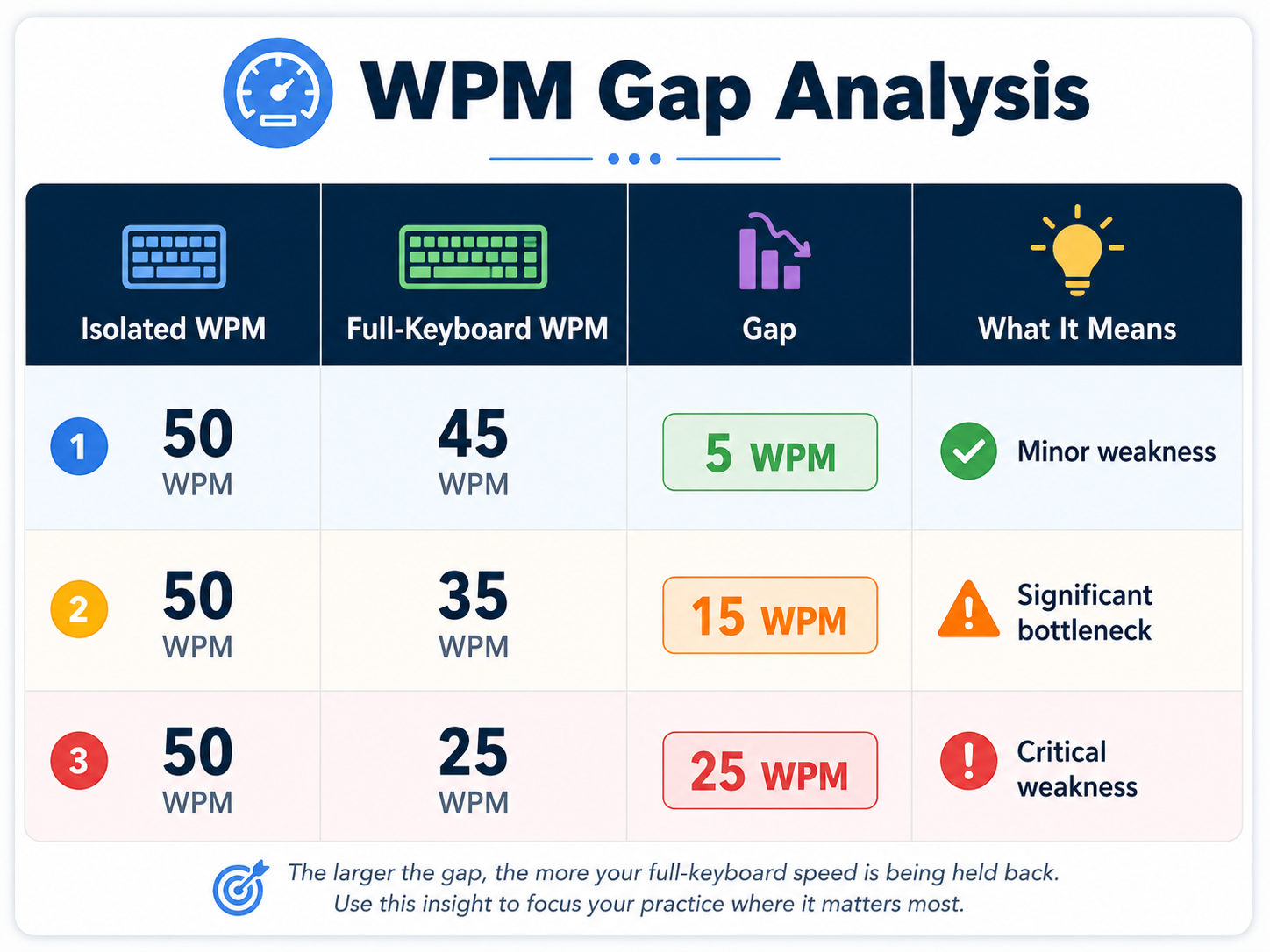
The gap between your isolated-row speed and your full-keyboard speed tells you how much this area is holding you back.
| Isolated WPM | Full-Keyboard WPM | Gap | What It Means |
|---|---|---|---|
| 50 | 45 | 5 WPM | Minor weakness; occasional drill sufficient |
| 50 | 35 | 15 WPM | Significant bottleneck; prioritize this practice |
| 50 | 25 | 25 WPM | Critical weakness; this area needs daily work |
If your gap is 15+ WPM, make home row typing practice a daily priority until the gap narrows to under 10 WPM.
Related Practice
Top row | Bottom row | Typing lessons
Our typing lessons include structured progression through all rows and hands, with automatic advancement based on accuracy thresholds. If you prefer guided learning, the lessons provide the same isolation benefits with built-in tracking.
Straight Answers
How long should I practice home row typing practice?
10–15 minutes daily until your accuracy on these keys hits 95%+. Then shift to maintenance mode (2–3x per week) and focus on full-keyboard speed work.
Will this really improve my overall typing speed?
Yes — if this area is your bottleneck. Isolated practice only helps if these keys are actually weaker than the rest of your keyboard. Run a full test first to identify your weakest keys, then target those specifically.
Can beginners use this?
Absolutely. In fact, beginners benefit most from isolated practice. Our typing practice for beginners uses the same row-by-row approach to build foundation skills before combining everything.
How do I increase typing speed after mastering these keys?
Integrate back into full-keyboard practice. Run an alphabet typing test to check your overall progress. To how to type faster, combine isolated row practice with complete passage drills. Track your average words per minute typing weekly to see improvement.
How do I increase typing speed with this test?
Daily keyboard practice focused on weak keys. 15–20 minutes per day. To increase typing speed past your current level, combine this test with targeted drills. Track your average words per minute typing across sessions. Our accuracy guide has the full method.
Can I use this to learn how to type with all fingers?
This test measures; it doesn't teach. To learn how to type with all fingers properly, start with our typing lessons or typing practice for beginners. Once you have the foundation, use this test to benchmark progress.
Is this a good game for increasing typing speed?
This test is a benchmark. For competitive fast typing practice, try the multiplayer typing race. For structured learning, use our typing lessons. For fast typing drills, combine this test with weak-key practice.
How do I increase typing speed in computer use?
Proper keyboard typing form, daily keyboard practice, and good posture. Whether you want to how to type faster or how to increase typing speed in computer setups specifically, the fundamentals are the same. Use our posture guide for ergonomic setup.
How do I increase my typing skills overall?
Consistent daily practice. 15–20 minutes of focused keyboard practice beats occasional long sessions. To how to increase your typing skills, work on accuracy typing first — 95%+ is the professional standard. Then build speed with fast finger typing drills. Whether you use Typers World or typing master pro, the fundamentals are identical: form first, speed second.
What's a good average typing speed?
The average typing speed is 40 WPM globally 16 . 60 WPM is proficient for most roles. 80+ WPM is fast. To reach high typing speed, you need proper form and consistent practice. Run an alphabet typing test to find your weak keys and drill them daily.
Related Articles
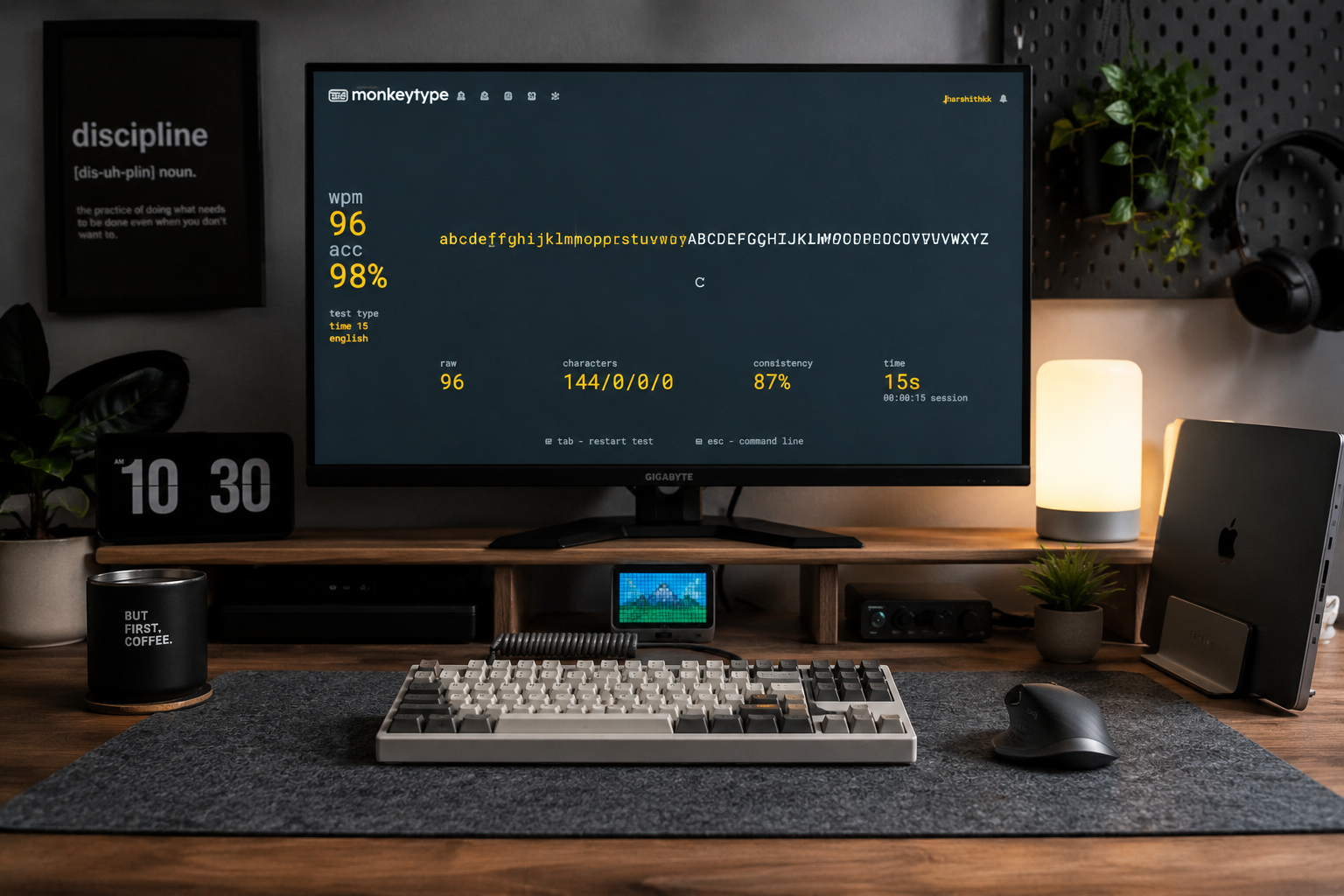
Alphabet Typing Test – Improve WPM, Accuracy, and Keyboard Control
Stop guessing where the letters are. Discover how simple A-to-Z alphabet drills can help you 'ingrain' the keyboard layout into your mind, fixing the common mistakes that keep your WPM stuck.
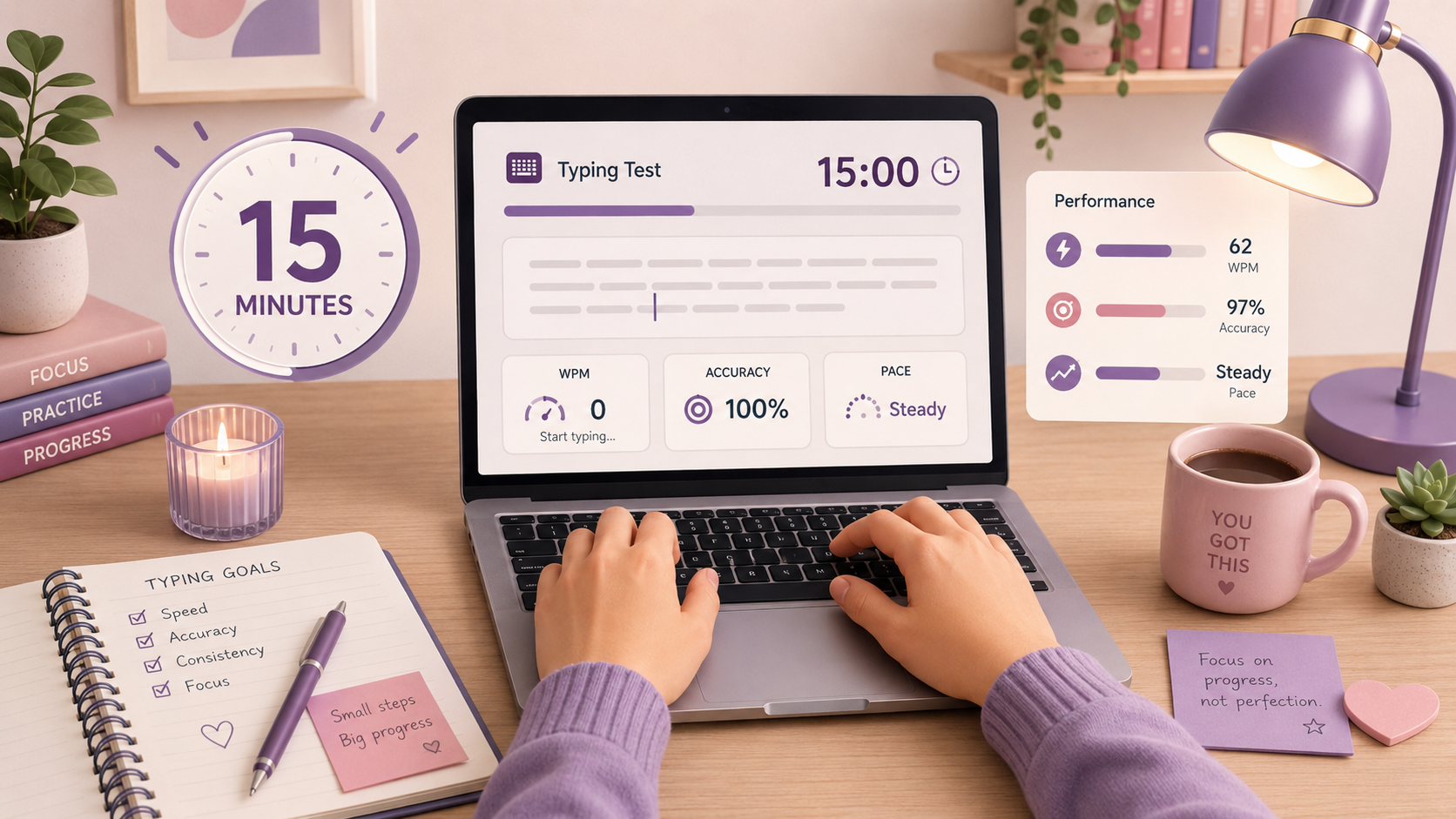
15 Minute Typing Test: Build Full Endurance & Focus | Typers World
Can you maintain your focus for a full quarter of an hour? The 15-minute typing test is the ultimate challenge for professional endurance. Learn how to manage finger fatigue, stay consistent, and reach the high standards required for legal and medical transcription careers.
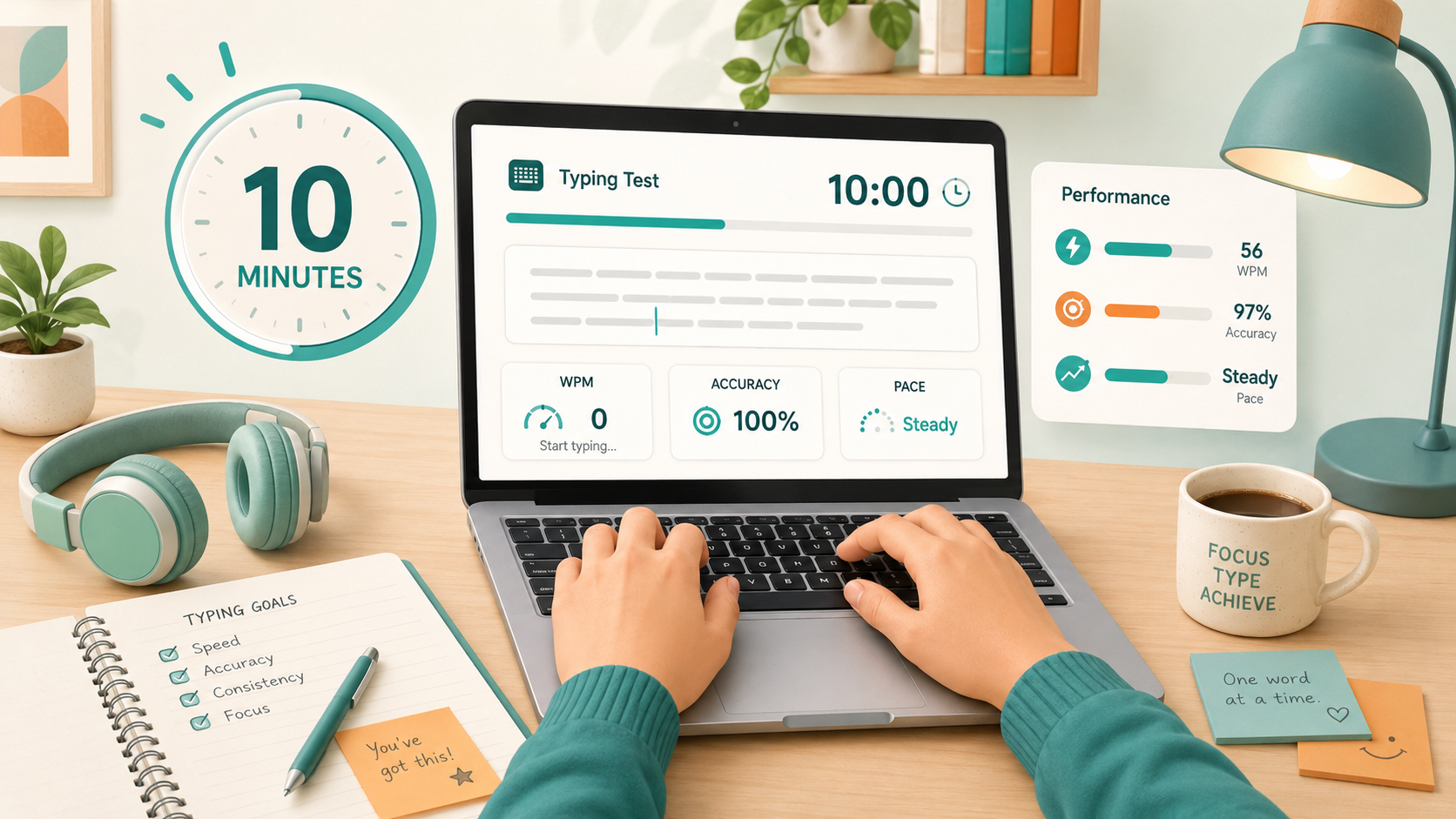
10 Minute Typing Test: Build Your Professional Stamina | Typers World
Can you keep your focus for 600 seconds? The 10-minute typing test is the gold standard for writers, developers, and transcriptionists. Discover how to build professional-grade stamina, avoid the mid-session slump, and prove you have what it takes for high-volume roles.