Practice typing full paragraphs to build sustained typing endurance and speed. Content-specific typing practice makes drills more engaging and targets skills that raw exercises miss.
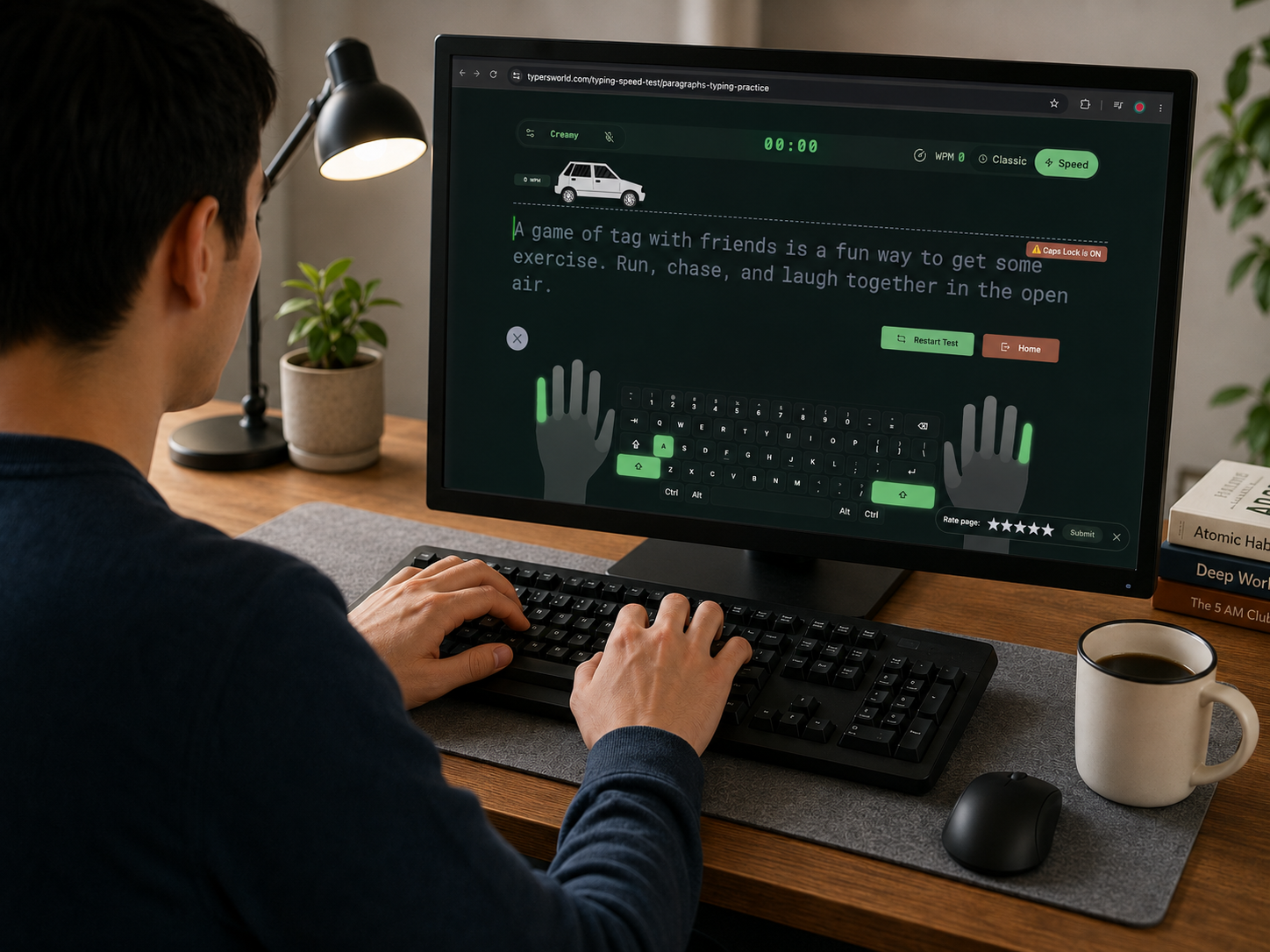
TL;DR: Full paragraphs makes practice more engaging while building real-world typing skills. Use it to break up monotonous drills and maintain motivation.
What This Practice Offers
Full paragraphs provides content that varies your practice material.
Standard english typing tests use generic passages. Paragraph Typing Practice uses full paragraphs for sustained practice. This variety serves several purposes:
- Engagement: Familiar content keeps practice from feeling like a chore
- Vocabulary exposure: Extended passages that test stamina and flow challenge your fingers in ways simple drills don't
- Contextual typing: Real sentences with natural punctuation and capitalization
- Memory independence: You can't memorize the content, so you're actually reading and typing simultaneously
Who Benefits Most
| User Type | Benefit |
|---|---|
| Intermediate typists (40–70 WPM) | Breaks plateaus with engaging content |
| Advanced typists (80+ WPM) | Tests adaptability to unfamiliar vocabulary |
| Students | Exposure to sustained passages while building speed |
| Anyone bored with generic drills | Fresh content maintains motivation |
If you're a beginner, start with our easy typing test or typing practice for beginners before moving to this content. If you're advanced, use paragraph typing practice to test your speed on unfamiliar vocabulary — it's harder to type words you've never seen before.
How to Use This Practice Effectively
| Session Type | Duration | Approach |
|---|---|---|
| Warm-up | 5 minutes | One passage to activate fingers |
| Skill work | 10–15 minutes | Multiple passages, focus on accuracy |
| Speed test | 1-minute extract | Measure WPM on this specific content |
| Cool-down | 5 minutes | Easy passage to finish the session |
Track your average words per minute typing across multiple passages. Content difficulty varies — a dense literary excerpt will yield lower WPM than simple song lyrics. Compare your scores on similar content types, not across radically different ones.
Scoring and Benchmarks
The average typing speed on standard prose is 40 WPM globally 16. Content-specific tests may show different numbers:
- Simple content (song lyrics, easy text): 5–10% above your standard prose WPM
- Standard content (paragraphs, quotes): Matches your standard prose WPM
- Complex content (literature, technical): 5–15% below your standard prose WPM
This variance is normal. It reflects reading speed and vocabulary familiarity, not just typing mechanics. If complex content is significantly slower, work on vocabulary recognition speed alongside your keyboard practice.
Related Practice
- For simple vocabulary: Easy typing test
- For structured learning: Typing lessons
- For speed benchmarking: One minute typing test
- For paragraph endurance: Paragraph typing practice
Straight Answers
Does content type affect my WPM?
Yes. Familiar, simple content yields higher WPM. Complex or unfamiliar content yields lower WPM. This is normal — it reflects reading comprehension as much as typing mechanics.
Should I use this or standard typing tests?
Both. Standard tests measure your pure typing mechanics. Content-specific tests measure your real-world typing ability on engaging material. Use standard tests for benchmarking, content tests for motivation and variety.
How do I improve on complex content?
Read ahead while typing. Glance at the next 2–3 words while finishing the current one. This reduces hesitation on unfamiliar words. Combine with daily keyboard practice on your weakest keys.
How do I increase typing speed with this content?
Practice regularly. 15–20 minutes daily. Track progress. To how to type faster on engaging content, mix paragraph typing practice with targeted drills. Use our game for increasing typing speed — the multiplayer race — to add competition. Track your average words per minute typing across sessions.
How do I increase typing speed with this test?
Daily keyboard practice focused on the specific skills this test measures. 15–20 minutes per day. To increase typing speed past your current level, combine this test with targeted drills on your weakest keys. Track your average words per minute typing across sessions. Our accuracy guide has the full method.
Can I use this to learn how to type with all fingers?
This test measures; it doesn't teach. To learn how to type with all fingers properly, start with our typing lessons or typing practice for beginners. Once you have the foundation, use this test to benchmark your progress.
Is this a good game for increasing typing speed?
This test is a benchmark. For competitive fast typing practice, try the multiplayer typing race. For structured learning, use our typing lessons. For fast typing drills, combine this test with weak-key practice.
How do I increase typing speed in computer use?
Proper keyboard typing form, daily keyboard practice, and good posture. Whether you want to how to type faster or how to increase typing speed in computer setups specifically, the fundamentals are the same. Use our posture guide for ergonomic setup.
How do I increase my typing skills overall?
Consistent daily practice. 15–20 minutes of focused keyboard practice beats occasional long sessions. To how to increase your typing skills, work on accuracy typing first — 95%+ is the professional standard. Then build speed with fast finger typing drills. Whether you use Typers World or typing master pro, the fundamentals are identical: form first, speed second.
What's a good average typing speed?
The average typing speed is 40 WPM globally [^16^]. 60 WPM is proficient for most roles. 80+ WPM is fast. To reach high typing speed, you need proper form and consistent practice. Run an alphabet typing test to find your weak keys and drill them daily.
Related Articles
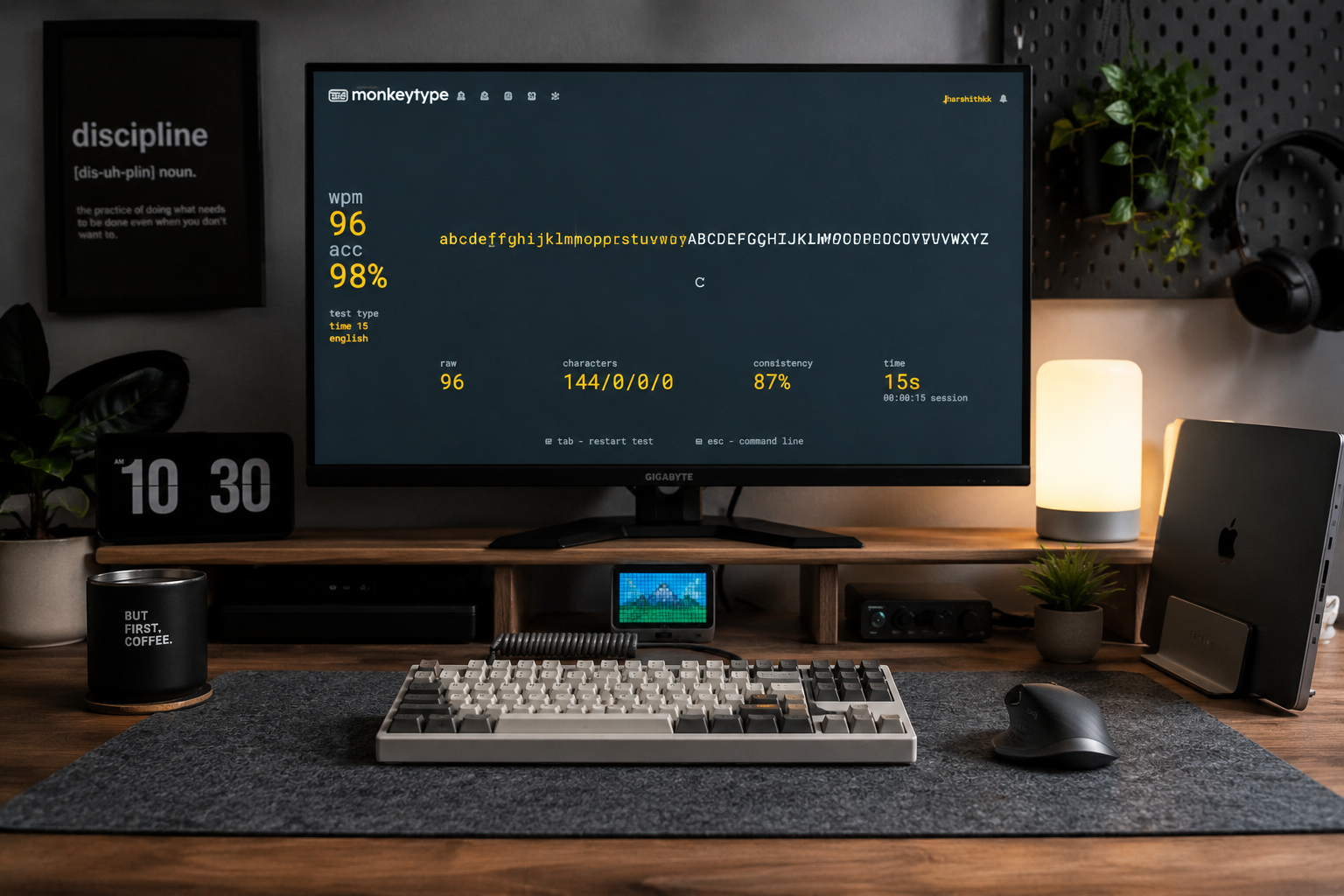
Alphabet Typing Test – Improve WPM, Accuracy, and Keyboard Control
Stop guessing where the letters are. Discover how simple A-to-Z alphabet drills can help you 'ingrain' the keyboard layout into your mind, fixing the common mistakes that keep your WPM stuck.
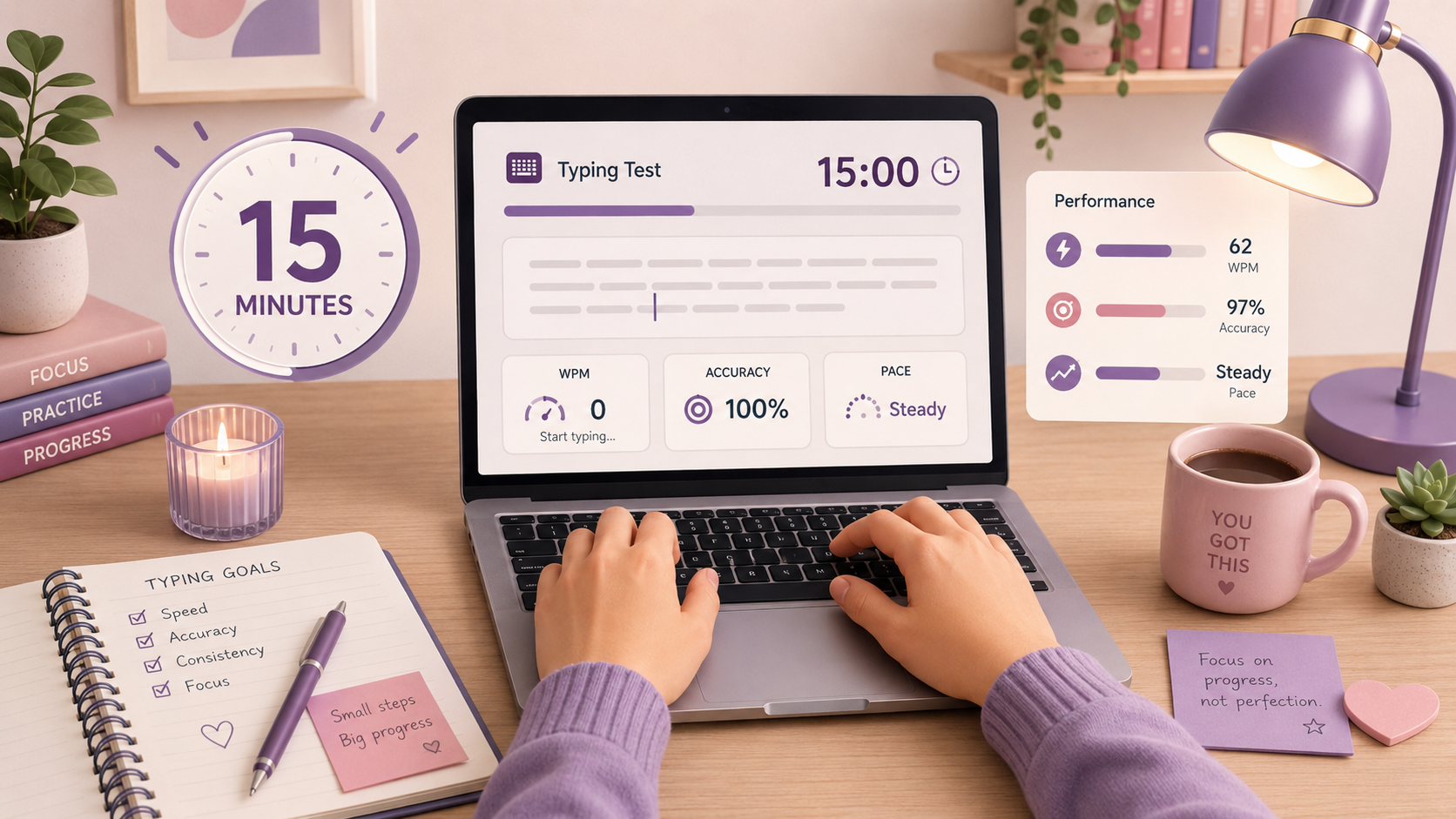
15 Minute Typing Test: Build Full Endurance & Focus | Typers World
Can you maintain your focus for a full quarter of an hour? The 15-minute typing test is the ultimate challenge for professional endurance. Learn how to manage finger fatigue, stay consistent, and reach the high standards required for legal and medical transcription careers.
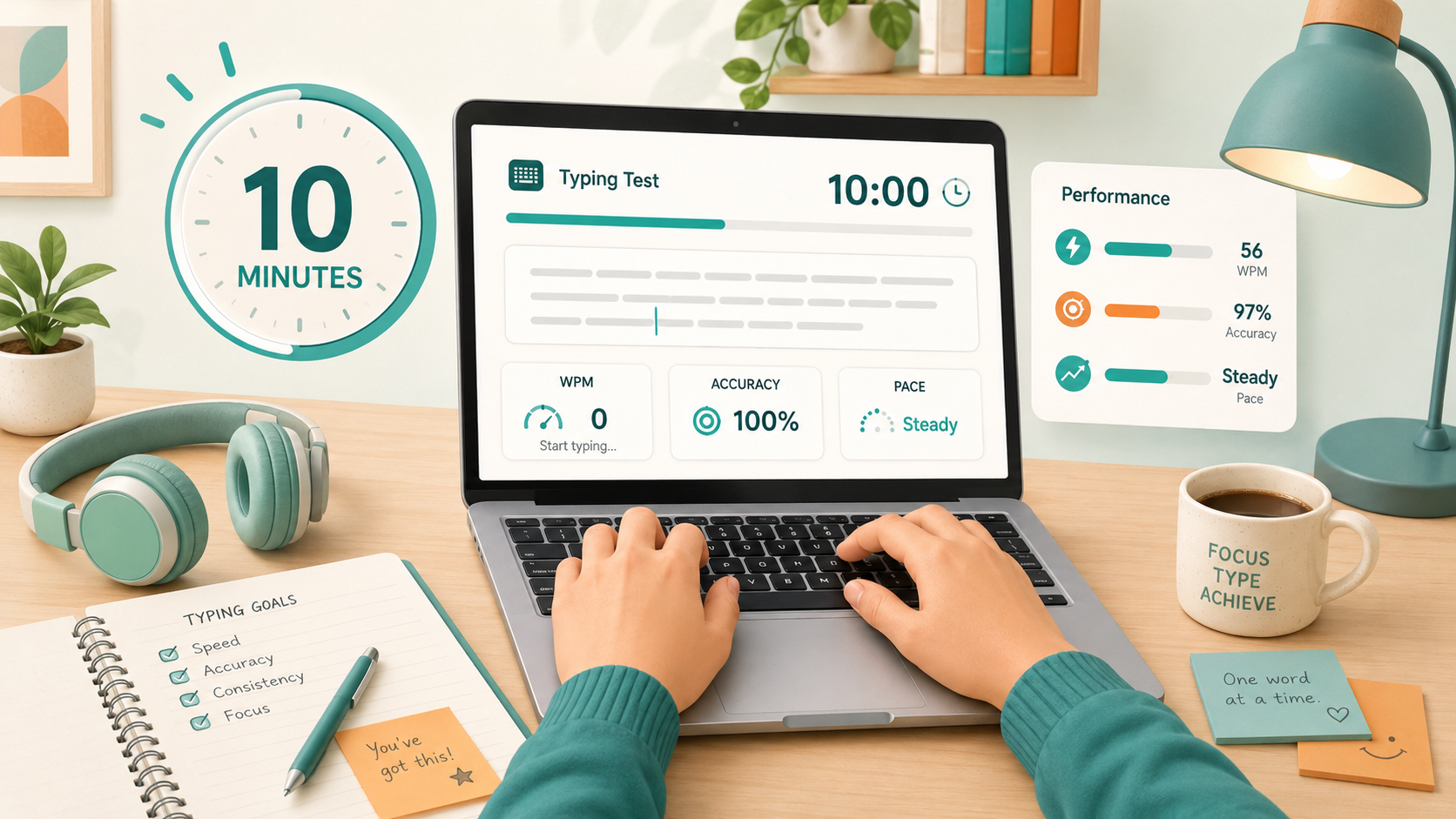
10 Minute Typing Test: Build Your Professional Stamina | Typers World
Can you keep your focus for 600 seconds? The 10-minute typing test is the gold standard for writers, developers, and transcriptionists. Discover how to build professional-grade stamina, avoid the mid-session slump, and prove you have what it takes for high-volume roles.